


We attended an iftar this evening hosted by the New York Taxi Workers Alliance (NYTWA), following an invitation from Executive Director Bhairavi Desai. Held at sunset during Ramadan, when Muslims break their fast, the gathering carried both reflection and quiet momentum as the Islamic holy month approaches its end. The event took place at NYTWA’s Long Island City office.
We arrived early. While we’ve interviewed Bhairavi and interacted with NYTWA advocates over the years, we had never been inside their offices. What stood out immediately were the walls—lined with detailed posters, campaigns, milestones, and hard-fought victories.
This wasn’t just a workplace. It was both an archive and an operational center for drivers.
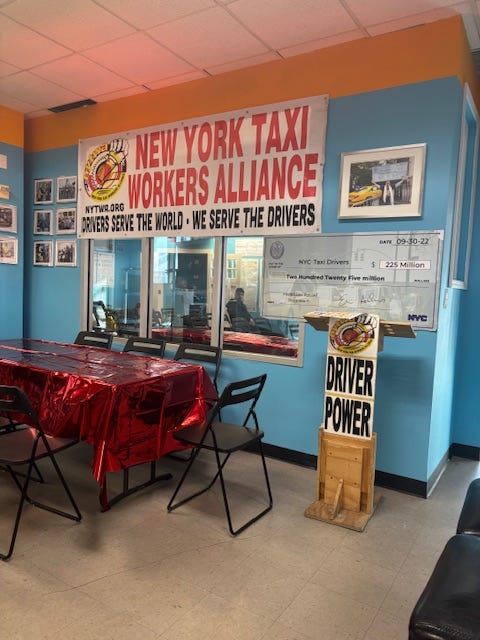
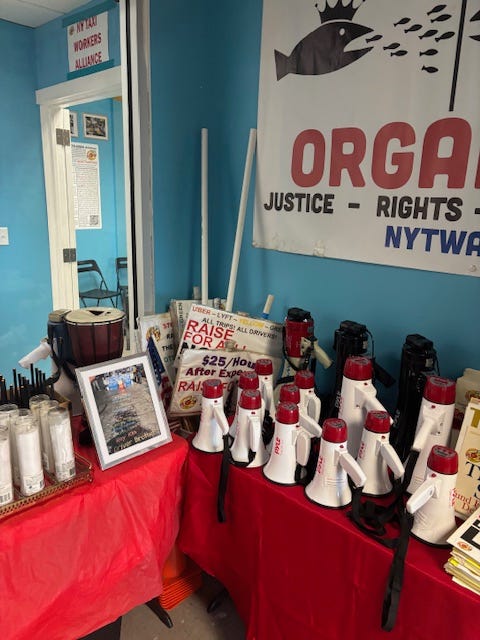
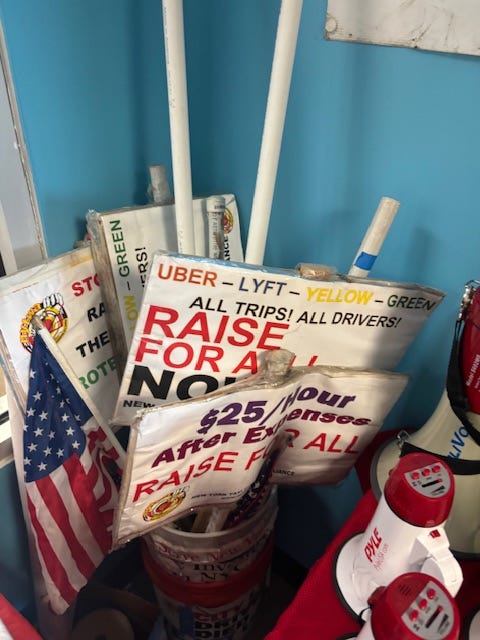
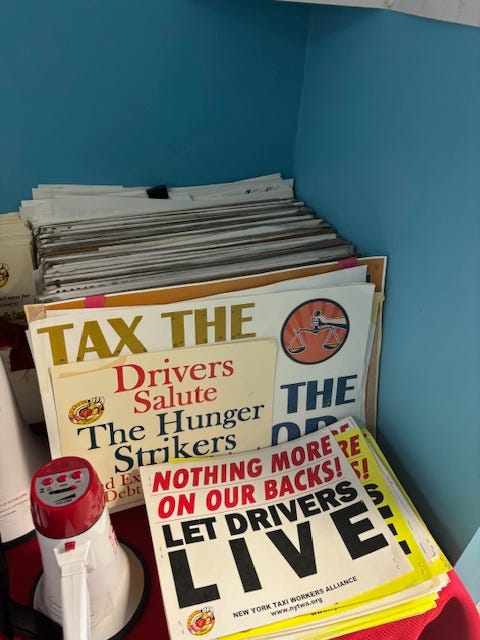
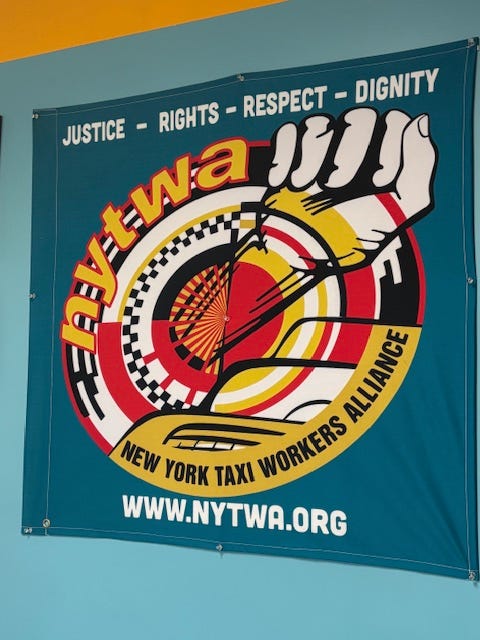
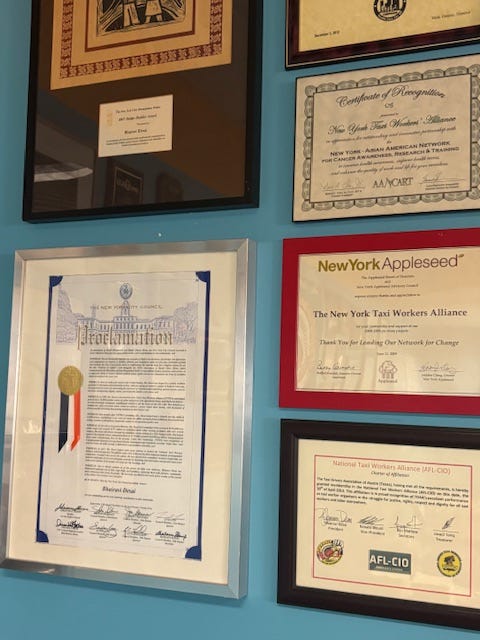
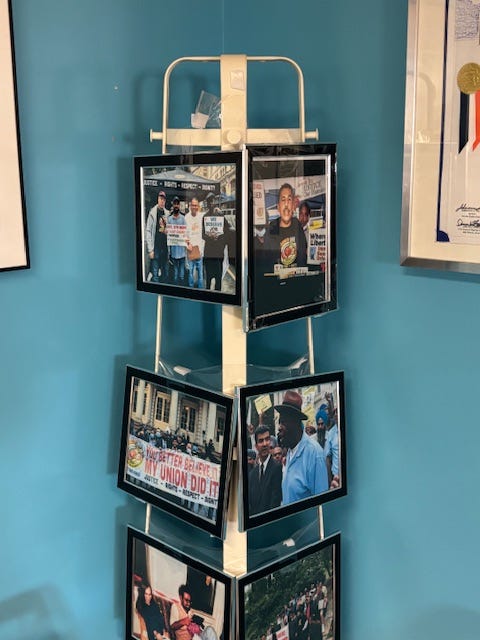
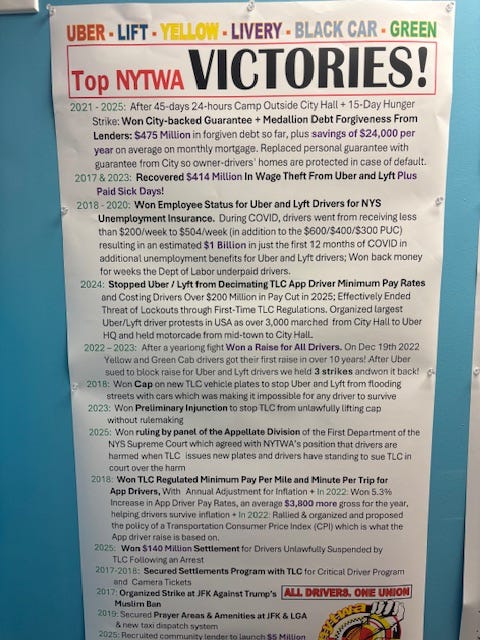
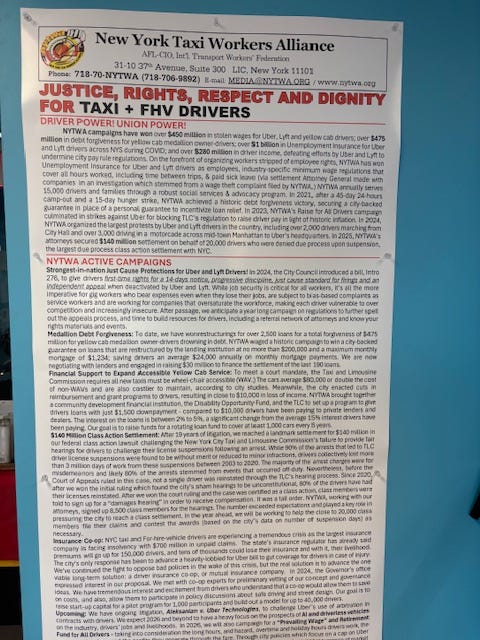
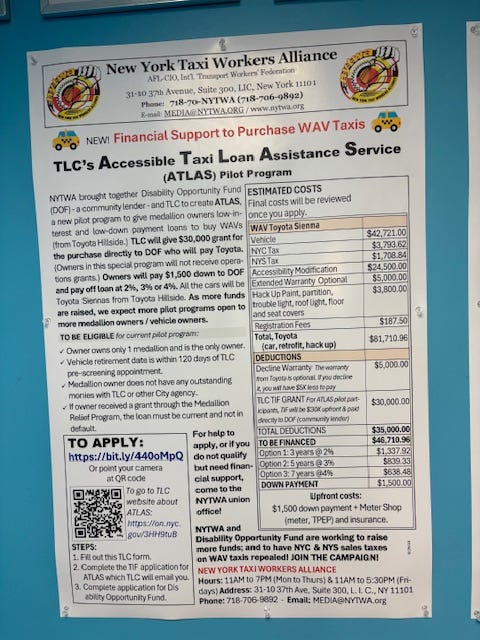
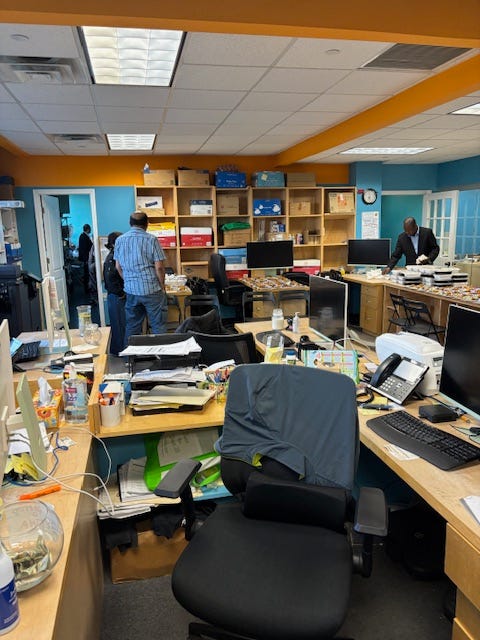
The space itself tells the story of a labor movement that has shaped New York City’s taxi and for-hire vehicle industry for decades. In an era where so much of the industry operates through apps, dashboards, and remote systems, there is something grounding about seeing where organizing actually happens—where drivers gather, where strategy is debated, and where pressure is built long before it becomes visible.
We won’t always agree with what comes out of rooms like this—and that tension is part of the story. But understanding this industry requires understanding where its leverage is created. These offices are not symbolic. They are functional. They are where narratives are shaped, alliances are formed, and influence is built.
That context is what made the evening notable.
Mayor Zohran Mamdani, TLC Chair nominee Midori Valdivia, and Deputy Mayor for Economic Justice Julie Su were all present, standing alongside a driver union that has historically operated outside, and often in opposition to, the centers of power.
In his remarks, Mamdani described NYTWA as “home,” reinforcing a relationship built not in office, but through years of organizing alongside drivers. He recalled moments of collective struggle, including the 2021 taxi medallion hunger strike where participants “did not know when that fast would end,” drawing a direct connection between the meaning of Ramadan and the movement that shaped his political rise.
He closed with a line that landed clearly in the room: drivers, he said, would “no longer be on [their] own”.
In an industry defined by years of friction, including shock plate releases, driver “lockouts,” uneven enforcement, and persistent financial pressure, this level of alignment signals something meaningful. Whether it endures is another question. But the signal itself matters.
This is more than a political moment. It points to a structural shift.
For years, NYTWA built its influence from the outside through protest, organizing, and sustained pressure on policymakers and regulators. That model has been effective, and it has not gone unnoticed. Deputy Mayor Su noted that organizers across the country have long looked to NYTWA as a model for what is possible.
The question now is what happens when that same organization is no longer pushing from the outside, but operating closer to the center of power.
For the broader industry, including fleets, app platforms, insurers, and other stakeholders across the TLC ecosystem, that question is not theoretical. It has practical implications.
Those implications may soon take more concrete form. In the FHV sector, that could mean renewed pressure for a lease cap model—effectively a form of rent stabilization that already exists in the yellow cab market. On the insurance side, NYTWA has previously explored the creation of a driver-owner cooperative or mutual insurance structure, an idea that could re-emerge as affordability pressures intensify.
Does that mean TLC rental companies should be alarmed? Not necessarily. Does it mean insurers will stop raising rates? No.
What it does mean is that these concerns are becoming harder to sideline.
Expectations are shifting. Engagement with labor is no longer optional or something to be managed indirectly—it is becoming central to how policy is shaped.
That shift is not without complexity.
As fleet operators ourselves, we understand the pressures on all sides. Drivers often assume margins are higher than they are. Operators, in turn, face cost structures that are not always visible or easily explained. Misalignment is real, but so is interdependence.
The answer is not defensiveness. It is direct dialogue.
Even when there is disagreement, transparency builds credibility. Over time, that creates a healthier dynamic. Not business versus labor, but business and labor working toward a more balanced outcome.
That is why spaces like NYTWA’s offices matter.
It is better for difficult conversations to happen in rooms like these, where interests can be challenged directly, than only at public hearings, which too often promote monologue instead of dialogue.
TLC Chair nominee Midori Valdivia echoed that tone, positioning herself as a listener and a champion for drivers. Mamdani, for his part, appears intent on charting a different course than previous administrations. There is a clear emphasis on driver protection, preserving the value of the taxi medallion, and reinforcing a simple but often overlooked idea:
This is the drivers’ industry.
Just as importantly, he has not distanced himself from the spaces and communities that helped shape his rise. He has returned to them and signaled that they will remain relevant.
If this moment represents the beginning of a new phase, it will not be defined by symbolism. It will be defined by decisions on enforcement, accountability, and whether drivers actually feel the shift being promised.
The question is no longer whether NYTWA has influence.
It is how that influence will be exercised now that it sits closer to power.
This is not promotion. It is an observation of where influence is consolidating, and how it may begin to reshape the rules of the industry.
Finally, we thank Bhairavi and the NYTWA for the invitation to this evening’s event.
Also available on YouTube ⬇️
AutoMarketplace reports on and invests in New York City’s for-hire transportation (TLC) industry and the wider automotive mobility landscape.
AutoMarketplace.com is a data intelligence and market infrastructure platform for New York City’s for-hire vehicle ecosystem—delivering proprietary indexes (AYX, APX, AIX), real-time analytics, and marketing services across taxi medallions, TLC plates, and commercial insurance.
Check out AutoMarketplace on YouTube. Interested in advertising with us? Click here


